Same work.More you.

Explore more

I’VE FOUND THAT

A lot of the things people call boring are actually the things that matter most.

Repeating good exercises.

Following a routine.

Getting stronger over time.

Giving it enough time to work.

They’re basic. They’re not always exciting.

But they’re usually what makes the difference.

Life is already busy enough,

so I’d rather keep the important part simple.

Let your training have structure.

Then keep the variety for everything else.

Dance. Hike. Swim. Try Pilates, CrossFit, conditioning, gymnastics, cycling or whatever you enjoy.

Your training can be repetitive.

Your life doesn’t have to be.

If this sounds like you,

KEEP READING

Before you start

Take your time with this page.

There’s already too much fitness information online. I don’t think you need more of it.


I want to help you understand what actually matters, what can wait, and what’s worth doing consistently.


Before you decide if I’m the right coach for you, I want you to understand how I train, how I coach, and what I expect from the process.

There’s no right coach for everyone.


What matters is finding someone whose approach makes sense to you and feels like something you can actually stick to.

So keep reading. This page is here to show you exactly how I do things.

A little about me

Over the past few years, training has become a big part of my life because of what it added to it, not because I wanted fitness to become my whole personality.

What surprised me most is that the biggest changes didn’t come from doing more and more.

They came from getting better at the basics, repeating what worked, and giving it enough time.

That’s a big part of why I believe boring works.

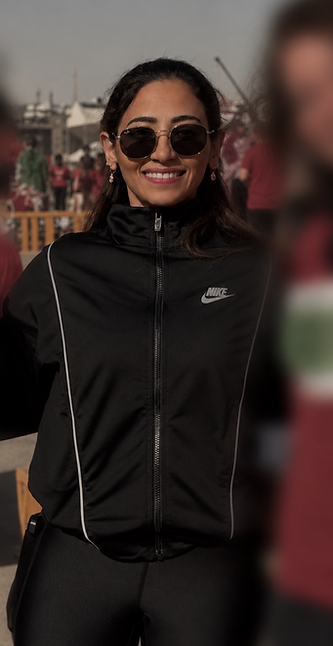
Your coach, smiling outdoors
What changed for me

I feel stronger. I have more energy. I move better. Things like knee discomfort and backaches have become easier to manage. I feel better mentally.

None of that came from constantly changing what I was doing.

A big part of it came from training regularly, sticking with the things that worked, and letting progress build over time.

Once training became part of my routine, I stopped having to constantly rethink it and had more space for everything else.

It made me feel more capable of enjoying my life, not more consumed by fitness.

I’m still in it too

I’m still learning, still getting stronger, still improving how I move, and still figuring out what works best for me.

I don’t think this is something you ever completely finish.

You build the foundation, keep improving it, and keep coming back to the things that work.

The goal isn’t to constantly reinvent your training.

It’s to keep building on it.

Why I coach

Coaching isn’t my full-time job.

I do it because I genuinely enjoy training, learning about it, and helping other women make the process clearer.

A lot of people don’t need more exercises, more rules, or more fitness content.

They need someone to help them know what to focus on, what to repeat, and when to simply keep going.

That’s the kind of coaching I want to give.

How I train

A few things I want you to know before we train.

We will make fitness less confusing.

There’s already too much fitness information around you.

One person tells you to do Pilates. Another tells you to lift weights. Someone else says you need more cardio. Then there’s a new diet, a new supplement, a new workout, a new rule.

And what are you actually supposed to look like?

Social media keeps giving you new labels.

Toned. Lean. Strong but not bulky. Curvy but still small.

Then you see someone with the body you like, and suddenly there’s a workout, a diet, or a routine telling you that if you do the same thing, you can look the same too.

But can you actually train your way into someone else’s body?

Not really.

Two women can train the same way, eat similarly, and still look completely different.

Your structure, genetics, where you naturally store fat, how you build muscle, and where you’re starting from all matter.

And then come all the extra rules.

  • Lift light so you don’t get bulky.
  • Do more reps to tone.
  • Do more cardio to lose fat.
  • Avoid certain exercises so you don’t build “too much” muscle.

No wonder it gets confusing.

So what actually matters?

Training isn’t only about how your body looks now.

I also want it to help you stay strong, capable and active years from now.

So we’re going to simplify it.

We’ll focus on what actually supports your goal, what your body actually needs, and what’s worth doing consistently.

You don’t need to do everything.

Basics work. Boring works too.

I want you to keep your expectations real.

Social media changes the standard all the time.

Social media can make it very easy to forget what real bodies actually look like.

Good lighting. Good angles. Posing. Editing. Filters. And sometimes just seeing the same type of body over and over until it starts to feel like that’s what a body is supposed to look like.

But even that keeps changing.

At one point, being very thin was the goal. Then curves became the goal. Then it was a tiny waist with bigger glutes. Then athletic. Then something else.

The “ideal” keeps moving. Your body doesn’t need to keep chasing it.

Not everything you see needs to be fixed.

Every time the trend changes, there’s usually something new being sold around it. A diet. A program. A treatment. A procedure. A medication. A product.

That doesn’t mean those things are bad. If there’s something cosmetic you genuinely want to change, there are options for that, and that choice is completely yours.

I just don’t want a trend deciding what you think needs fixing.

You can have cellulite and be strong.

You can have stretch marks and build muscle.

You can have loose skin and still move well, train hard and be very fit.

How your body looks and what your body can do are not the same thing.

Training can change a lot, but it has a job.

We can lose fat. Build muscle. Change your shape. Get stronger. Move better. Improve mobility and control.

But not every normal feature of your body needs to disappear for your progress to count.

Training is there to build and improve your body, not erase every human feature from it.

Some things still have to be built.

You can change your appearance in different ways.

But strength has to be built.

Muscle has to be built.

Movement has to be practised.

Your body’s capacity has to be developed over time.

That’s the part you can’t buy.

I care about both.

I care about how you want your body to look. If it matters to you, it matters to me too.

But I also care about how strong you are, how well you move, and what your body can actually do.

I want you to build the strongest, healthiest and most capable version of your body that makes sense for you. Not the body that happens to be trending right now.
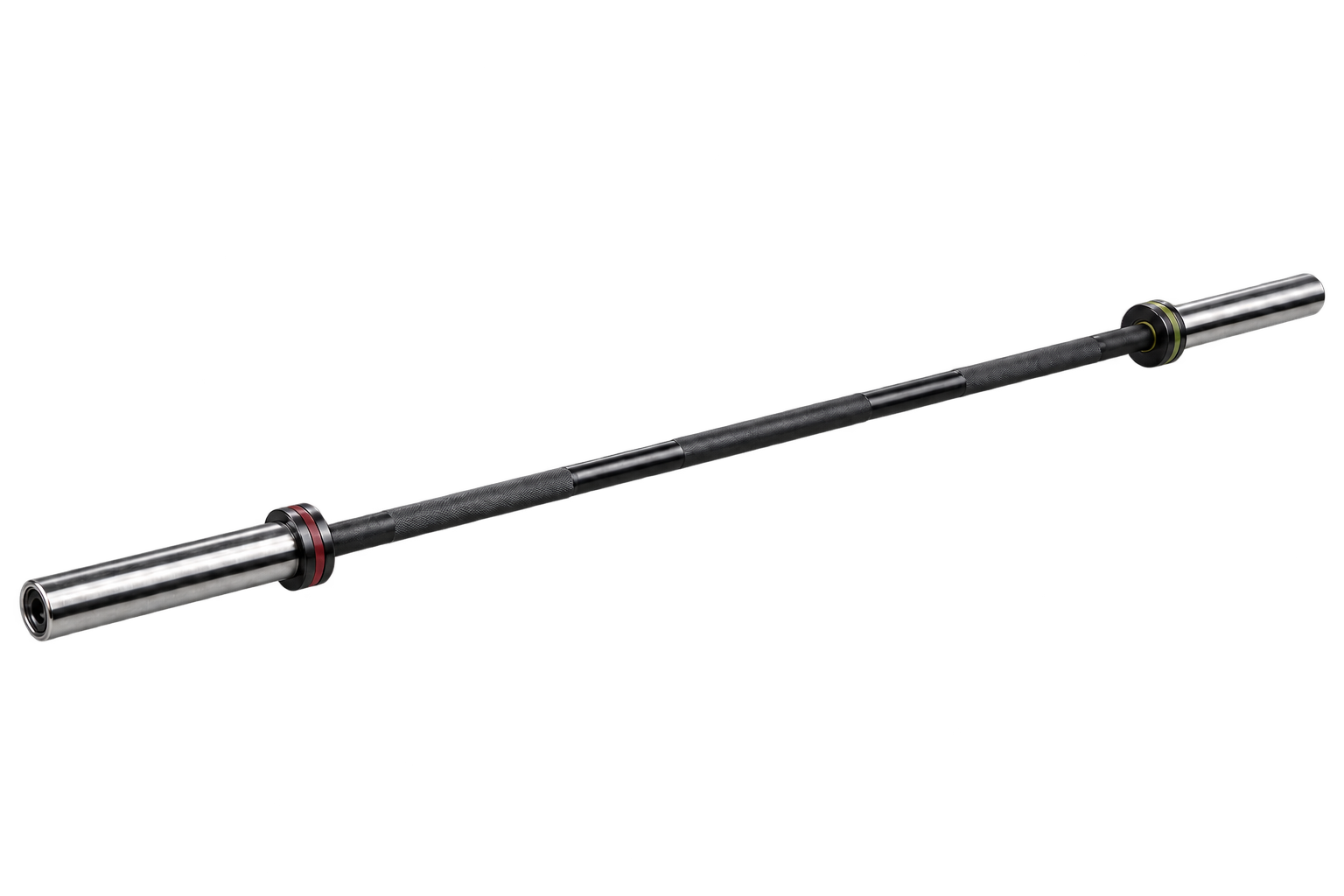
So what are we actually going to do? Resistance training is the base.

Four days. Full body covered.

Most of your program will be resistance training.

You’ll train four days a week, with two lower-body sessions and two upper-body sessions.

That gives us enough time to train your whole body properly, put more attention on the areas you want to develop, and still keep each session around 50 to 60 minutes.

We’ll work on your glutes, shoulders, arms and back, while still building balanced strength across your whole body.

Why four days?

You can make progress training two, three, four or more days a week.

There isn’t one perfect number.

For this program, I think four days is the sweet spot.

It gives us enough room to train the whole body properly, give extra attention to the areas we want to develop, include mobility and some skill work, and still keep the sessions around an hour.

With fewer days, we can still make progress, but we’d either need longer sessions or make more choices about what gets less attention.

With more days, you may get more training time, but you also have more sessions to fit into your week and more recovery to manage.

Four days gives us enough training to make real progress without asking you to live in the gym.

Yes, how your body looks matters.

If you want to lose fat, build shape, feel better in your clothes or simply like what you see more, that’s a valid goal.

But I don’t want that to be the only thing you get from training.

I also want you to get stronger, move better, control your body better and gradually become able to do things that used to feel difficult.

Come for the body. Stay for what it can do.

That’s why resistance training stays at the centre of the program. It gives us something we can actually build on over time, both in how your body looks and in what your body can do.

How do we actually make progress and see results? The magic is usually in the boring part.

You’ll repeat some exercises.

You’ll see some of the same exercises for several weeks.

That’s intentional.

You need enough time to learn the movement, improve your technique, get more comfortable with it, and actually know whether you’re progressing.

If we changed everything every week, you might feel like you’re doing more, but it would be much harder to tell if you’re actually getting better.

Then we progress them.

Progress might mean adding reps.

It might mean adding weight.

It might mean using better technique, better control, or a bigger range of motion.

Sometimes the exercise stays exactly the same, but you become better at doing it.

That matters.

You’ll learn how to judge your own training too.

I don’t want you to just follow numbers on a screen.

You’ll start learning how heavy you should go, what a good working set feels like, when you’re ready to increase the weight, and when something actually needs changing.

The goal is that you understand your training more and more as you go.

We change things when there’s a reason.

If an exercise is working, we keep it.

If a variation no longer makes sense, you’ve progressed past it, or something needs adjusting, we change it.

We don’t change exercises just to make the program feel new.

And that’s really what I mean by boring works.

Not because training has to feel boring.

Because a lot of progress comes from doing the right things again, getting better at them, and giving them enough time to work.

We’ll also work on your mobility, balance and control so you can use your strength better.

Resistance training is still the main part of the program.

But getting stronger is only one part of moving well.

You also need enough range of motion to get into the positions you need, enough balance to stay steady, and enough control to move through them properly.

We’ll work on those things inside the program itself.

Sometimes that will be part of your preparation before training. Sometimes it will be part of the cool-down. And sometimes it will simply come from the way certain movements are programmed.

You won’t need a separate mobility plan, a separate balance routine, or another list of things to remember.

It’s all part of the training.

Food is a big part of life. It gives us energy, we enjoy it, and it plays a big role here.

I’m not going to plan every meal for you.

You’ll have a daily protein target, and if fat loss is your goal, I’ll help you understand how much you should be eating so your food supports that goal.

I want you to learn how to eat the food you already eat, just with more awareness.

You can cook at home. Eat with your family. Go out with your friends. Have fast food. Have coffee and dessert. Go to gatherings, weddings and Eid.

And sometimes, the meals people call “boring” are exactly what makes things easier.

Having a few go-to meals that you already know, enjoy, and can easily fit into your protein and calorie targets gives you structure without making food complicated.

You don’t need endless variety at every meal. You just need enough structure to make the rest of your food flexible.

The goal is not to put you on a strict diet you can only follow for a few weeks. It’s to help you understand your food well enough to make your current lifestyle work for you long term.

For most people, we’ll keep nutrition practical and focused on the basics that support your training and your goal.

If you have a medical condition, specific dietary needs, or anything that requires therapeutic nutrition support, I’ll recommend working with a qualified dietitian or healthcare professional for that part.

The gym is one hour. What about the rest of your day?

Your workouts matter, but they’re only a small part of your day.

Most of us spend a lot of time sitting. At work. In the car. At home.

That’s why you’ll also have a daily movement or step target.

The goal isn’t to chase a number for no reason. It’s to make sure your body is still moving outside the gym.

If you’re travelling and walking all day, that counts.

If you’ve spent the day cleaning, running errands, walking around at work or moving more than usual, that counts too.

And on quieter days, you might need to be a little more intentional. Go for a walk. Use a walking pad.

Take the stairs. Split your movement throughout the day.

Moving more also increases how much energy you use across the day, so it can support fat loss without adding another hard workout.

Think movement, not just steps.

Where does cardio fit? We use it when it helps.

Cardio is useful for your heart, your fitness and your general health.

It also uses energy, so it can support fat loss.

But more cardio does not automatically mean more fat loss.

Your food still matters most for creating the calorie deficit needed for fat loss, so I don’t want you doing endless cardio just to feel like you’ve worked harder.

Sometimes we might use incline walking, cycling or Zone 2.

Other times, we might do a short conditioning session where you move a little faster, improve your fitness and practise movements that feel different from your usual strength work.

Resistance training stays the base. Cardio and conditioning support it when they add something useful.

Sleep, water, recovery and supplements.

Your training and food do most of the work, but a few other things support the results too.

Sleep

Aim to sleep well enough to recover, perform and feel good. It doesn’t need to be perfect every night, but consistently poor sleep makes everything harder.

Hydration

Drink enough water across the day, especially around training and in hotter weather.

Blood work and general health

If you’re feeling unusually tired, low in energy, or something feels off, it’s worth checking your health properly rather than assuming you just need another supplement.

Supplements

Keep them simple. Creatine is one supplement I personally like and may recommend when appropriate. Other supplements should be based on an actual need, your diet, or blood work, not just because they’re popular.

Recovery

Not every day needs to be hard. Your body needs enough rest between sessions to actually adapt and get stronger.

Do the basics well. Don’t turn them into another full-time job.

And most importantly, GIVE IT TIME.

You may get stronger before you see a big change in the mirror.

Your technique may improve first. Your weights may go up. Your clothes may start fitting differently.

Your measurements may slowly change.

That all counts as progress.

Changing your body takes time, and I don’t want you deciding after a few weeks that something “isn’t working” just because the result isn’t dramatic yet.

Some weeks will also be better than others.

You might travel. Miss a workout. Sleep badly. Eat out more. Have a stressful week.

That doesn’t mean you failed, and it doesn’t mean you need to start over.

We look at what’s happening, adjust when there’s actually a reason to adjust, and keep going.

Sometimes something needs changing.

Sometimes the answer is simply more time.

Give the right things enough time to work.

What training with me looks like.

Cycle 0101 Cycle 0202 Cycle 0303 Tap a cycle. Keep building.

Your training moves in clear cycles.

Your training will be organised into clear phases.

Think of them as Cycle 1, Cycle 2, Cycle 3.

Each one has a purpose, and each one builds on what you already did before.

So instead of finishing one program and starting from zero again, we keep what’s working, progress what you’re ready for, and change what actually needs changing. You’re not constantly restarting.

You’re building on what you’ve already done.

Your training

All in one place.

Barbell hip thrust An illustrated woman raises and lowers her hips with her upper back supported by a bench, both hands holding a padded barbell at the hip crease and both feet planted. At the top, the shoulders, hips and knees align, with the shins upright. THE MOVEMENT Steady feet. Strong hips.
Hip thrustBarbellHold

Pause. Keep the ribs down.

Workout logged
Your progress

Everything stays in one digital place.

I use CoachRx to deliver the program.

That means your workouts, exercise videos, weights, reps, progress, check-ins and resources all stay in one place instead of being spread across PDFs, screenshots and messages.

You open the app, see what you’re doing that day, log your training, and move on.

The less time you spend figuring out where everything is, the more time you can spend actually doing the work.

A coaching example

You

Hi Coach, I’m not sure about my squat. Could you check my form?

Atheer

Of course. Send me a side-view video of a few reps, and we’ll go through it together.

Coaching is there when you need it.

The app gives you the structure, but it doesn’t replace coaching.

Think of me as standing right there with you when something doesn’t make sense.

If you’re unsure about your technique, if a movement doesn’t feel right, if you don’t know whether to increase the weight, or if your progress stops and we need to understand why, I’m there.

If you feel pain, if an exercise isn’t working for you, or if you simply can’t perform a movement well, we adjust it instead of forcing it.

Sometimes that means changing the variation. Sometimes it means choosing a different exercise. And if something looks like it needs medical or rehab support rather than a training adjustment, I’ll tell you that too.

I’ll also help you understand your training as you go, so over time you become better at making decisions for yourself.

The goal is not to make you dependent on me. It’s to help you become better at training.

How you start.

01. We talk first.

We start with a short call.

I want to know why you’re here, what you want from training, what your current routine looks like and anything I need to know before you start.

You don’t need to know what program you need.

You don’t need to know whether you’re at a beginner or intermediate level.

That part is my job.

02. You start with Start Week.

Before you settle into the program, you’ll actually train.

Start Week is a real week of workouts, not a list of tests.

For a few selected movements, I’ll ask you to film a set.

I’d rather see how you move than ask you to guess whether your mobility is good, whether your balance needs work or what level you think you’re at.

You train. I observe. Then we know where to start.

03. Then your program begins.

After Start Week, I’ll know your starting point better.

The main structure stays the same, but some exercise variations or preparation work may be different depending on what I saw.

You’re not getting a completely random program made from scratch.

You’re getting the right starting point inside a system that already has a reason behind it.

A few things I want you to know before we train.

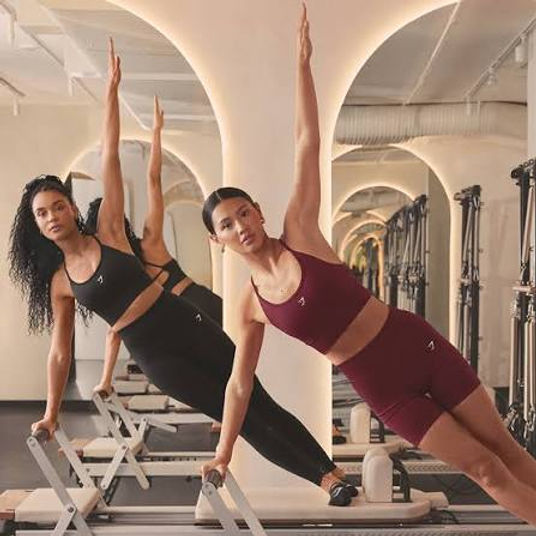
1. Pilates is good. It just isn’t doing the same job.

Pilates is not useless, and I’m definitely not against it!

It can improve things like flexibility, control, balance and movement, and if you enjoy it, I actually want you to keep doing it.

But if your goal is to build strength and change your body through muscle development, I don’t want it replacing your resistance training.

Recent research in women found improvements from Pilates in some fitness measures, but no clear pooled improvement in lean body mass or body-fat percentage. Resistance training, on the other hand, has consistent evidence for increasing strength and muscle mass. PubMed

Different tools. Different jobs.

Do Pilates because you like Pilates.

Your resistance training still stays the base.

2. More cardio is not the answer to everything.

Cardio is important.

Your heart needs it. Your fitness benefits from it. Your health benefits from it. Adults are recommended to get regular aerobic activity and muscle-strengthening activity. World Health Organization

And yes, cardio uses energy, so it can help with fat loss.

But doing more and more cardio does not magically solve fat loss.

For weight loss, the calorie deficit still matters. CDC guidance notes that physical activity helps create that deficit, but most weight loss usually comes from reducing calorie intake. CDC

So no, I’m not going to put you on a treadmill forever because you ate dessert.

We use cardio for a reason. Not as punishment.

3. Sweating is not a score.

A sweaty workout can feel satisfying.

It does not automatically mean it was more effective.

How much you sweat depends on things like temperature, humidity, clothing, genetics and your individual response to heat.

Sweat is mainly your body cooling itself down. It isn’t a reliable measure of calorie burn or workout quality. Cleveland Clinic

So I care much more about:

Did you train hard enough?

Was your technique good?

Are your reps or weights improving?

You don’t need to leave every workout destroyed for it to count.

4. Weight-loss injections can help. But I still want us to work on the mindset behind the weight loss.

Medications like Mounjaro can be very effective when they’re medically appropriate and prescribed by a doctor.

I’m not against them.

If you need them because of obesity, a medical condition, or because your doctor believes they’re appropriate for you, that’s a completely different conversation.

But I also don’t want you to get used to thinking that weight should always drop very quickly.

For many people, normal fat loss is slower than that.

A gradual rate of around 0.5 to 1 kg per week is commonly considered a reasonable pace for many adults, and sometimes it will be slower depending on the person and the stage of the process. CDC

So if you’ve experienced very fast weight loss before, we may need to reset your expectations a little.

Slower doesn’t automatically mean it isn’t working.

Appetite matters too.

These medications often work partly by reducing appetite and making you eat less without having to think about food as much. PubMed

That can be helpful for weight loss.

But from a training point of view, I still need you to eat enough to support the work we’re asking your body to do.

  • You still need enough protein.
  • You still need enough energy to train well.
  • You still need enough nutrition to recover.

And when your appetite becomes very low, hitting those basics can become harder.

That doesn’t mean it’s impossible, and it doesn’t mean you have to stop the medication.

It simply means we have to be more intentional with the food you are able to eat.

Losing weight and building a stronger body are not the same thing.

A lower number on the scale is not the whole goal.

During significant weight loss, some lean mass can be lost too. Research on incretin-based medications shows that resistance training and adequate protein are especially important for preserving muscle and function during the process. PubMed

So if you’re taking a weight-loss medication, I care even more about:

  • Resistance training.
  • Protein.
  • Recovery.
  • And keeping your body capable while the weight comes down.

If you’re only trying to lose a small amount of weight, I’d rather we first understand what’s actually needed.

Sometimes the answer is simply better structure.

  • More consistent training.
  • More daily movement.
  • A reasonable calorie deficit.
  • Enough protein.
  • And enough time.

If medication is medically appropriate for you, that decision belongs with your doctor.

My job is not to compete with the medication. My job is to make sure you’re still building the body underneath the weight loss.

5. Your abs don’t get to choose where the fat comes from.

This one needs a little nuance.

You can absolutely choose which muscle you train.

You cannot reliably tell your body exactly where you want it to lose fat first just by exercising that area.

Research on “spot reduction” is actually mixed: some small studies have found localised effects under very specific protocols, while the broader evidence has been inconsistent. PubMed

So I’m not going to promise you:

“Do this exercise and your lower-belly fat will disappear.”

We can build the muscle in an area.

We can reduce overall body fat.

But your body still has a lot of say in where that fat comes off first.

6. New exercises are not automatically better exercises.

Changing exercises can have a place.

But changing everything all the time is not automatically smarter training.

A systematic review found that planned variation can be useful, while excessive random exercise changes may actually interfere with strength and muscle development. PubMed

That’s why you’ll see some exercises stay in your program.

You need enough time to learn them, improve them and actually measure progress.

New can be fun. Progress still needs something to repeat.

That’s also where Boring Works comes in.

7. And no, you do not need to be “fit” before you start.

You don’t need good mobility first.

You don’t need to already know how to squat.

You don’t need to know what RIR means.

You don’t need to decide whether you’re at a beginner or intermediate level, or whatever TikTok told you you are.

That’s part of my job.

You start where you are. Then we build from there.

Your part. My part.

Your part!
  1. Show up.

  2. Train four days a week.

  3. Hit your protein.

  4. Stay active outside the gym.

  5. Log your training.

  6. Ask when you don’t understand something.

  7. Tell me when something doesn’t feel right.

  8. Give the process enough time to work.

I can give you the structure.

I can’t do the consistency for you.

My part!
  1. Give you a clear program and explain how to use it.

  2. Help you understand your weights, reps, effort and progression.

  3. Check your technique when something needs attention.

  4. Adjust a movement if it doesn’t suit you, causes pain, or simply isn’t working well for you.

  5. Answer your questions.

  6. Help you understand what actually needs changing and what just needs more time.

I’ll coach the training.

You still have to show up for it.

Are we a good fit?

We’ll work well together if...
  1. You’re already willing to show up.

  2. You can realistically train four days a week.

  3. You’re willing to hit your protein and daily movement target.

  4. You want to change your body and get stronger.

  5. You want structure, but you don’t want your whole life managed.

  6. You want feedback when you actually need it.

  7. You’re okay repeating exercises long enough to get better at them.

  8. You want to understand your training, not just follow instructions.

  9. You’re willing to give the process time.

  10. You don’t need someone to convince you to train. You need to know what to do when you get there.

I’m probably not your coach if...
  1. You need daily motivation to get yourself to train.

  2. Four training days a week isn’t realistic for you right now.

  3. You want a completely new custom program every week.

  4. You want someone checking every day whether you completed your workout.

  5. You’re looking for a strict meal plan or someone to manage every meal you eat.

  6. You want results without changing the habits that affect them.

  7. You expect a big transformation in a few weeks.

  8. You want your coach to be more committed to your goal than you are.

  9. If your priority is the fastest possible result, my approach probably isn’t for you.

Train with me.

1,200 SAR / 3 months

This isn’t a one-month plan.

I want enough time to actually train, progress, adjust when needed, and see what the work can do.

You’ll get:

  1. Your training program inside CoachRx.

  2. Start Week so I can see where you’re actually starting.

  3. Exercise adjustments when something doesn’t suit you or needs to change.

  4. Built-in mobility and movement work as part of the program.

  5. Progress tracking for your weights, reps and training over time.

  6. Simple nutrition and lifestyle targets including protein, daily movement and recovery basics.

  7. Technique feedback when something needs checking.

  8. Answers to your questions and coaching support when you actually need help.

  9. Resources inside CoachRx to help you understand your training as you go.

X  No transformation challenge.

X No 30-day reset.

  X No promise that your body will completely change in a few weeks.

Just good training, progression, coaching when you need it, and enough time to let the work show.

Where to?

BORING WORKS · COMING SOON

The program is coming soon.

Leave your name and email, and I’ll let you know when it’s ready.

Your email is for the program launch update.